Why Paint Peels in Hawaii—and How to Stop It
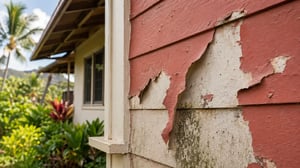
Peeling paint is more than a cosmetic problem. It is usually a sign that the paint has lost its bond with the surface underneath it.
In Hawaii, paint can peel faster because exterior walls are constantly exposed to intense sunlight, humidity, wind-driven rain, salt air, mildew, and changing moisture levels. Even premium paint can fail early if the surface was wet, contaminated, damaged, or improperly prepared before painting.
The short answer is this:
Paint commonly peels in Hawaii when moisture, salt, mildew, chalk, or deteriorated coatings prevent the new paint from bonding properly. Long-lasting results depend on correcting the underlying problem, thoroughly preparing the surface, using the correct primer, and applying a coating designed for Hawaii's climate.
Simply painting over the peeling area may hide the problem temporarily, but it usually does not stop it from returning.
The Most Common Causes of Peeling Paint in Hawaii
1. Moisture Is Trapped Behind the Paint
Moisture is one of the most common reasons exterior paint peels in Hawaii.
Water can enter a wall through:
- Roof or flashing leaks
- Cracks in stucco or masonry
- Failed caulking around windows and doors
- Plumbing leaks
- Unsealed penetrations
- Wind-driven rain
- Moisture moving through concrete or masonry
- High indoor humidity and poor ventilation
When moisture becomes trapped behind the coating, it pushes against the paint film as it tries to escape. This can cause bubbling, blistering, cracking, and peeling.
If the moisture source is not corrected first, repainting the wall will not provide a lasting solution.
2. The Surface Was Not Properly Prepared
Paint performs best when it is applied to a clean, dry, stable, and properly prepared surface.
If a contractor paints over loose paint, chalk, dirt, mildew, salt deposits, or deteriorated material, the new coating may attach to the contamination instead of the actual wall. When that weak layer releases, the new paint comes off with it.
Proper preparation may include:
- Inspecting the surface for damage
- Washing away dirt, chalk, salt, and biological growth
- Removing loose or failing paint
- Scraping and sanding peeling edges
- Repairing cracks and damaged areas
- Allowing the surface to dry
- Priming exposed or difficult surfaces
- Caulking appropriate joints and penetrations
Preparation is often the least visible part of a painting project, but it is one of the biggest factors affecting how long the finished coating lasts. For this reason, preparation should be itemized separately in an exterior painting estimate rather than folded into a single figure.
3. Mildew Was Painted Over
Hawaii's warm, humid climate creates favorable conditions for mildew, especially on shaded and windward walls.
Mildew may appear as black, gray, green, or brown spotting. If it is not properly treated and removed before painting, the new coating may fail to bond. The discoloration can also return through or across the freshly painted surface.
Painting over mildew does not eliminate the underlying growth.
The surface must be cleaned with an appropriate treatment, thoroughly rinsed when required, and allowed to dry before primer or paint is applied. Ongoing moisture and vegetation problems should also be addressed to reduce the chance of mildew returning.
4. Salt Contamination Weakens Paint Adhesion
Homes near the ocean are exposed to airborne salt carried by coastal winds. Salt can collect on siding, stucco, trim, railings, fasteners, and other exterior surfaces.
If salt is left on the surface before painting, it can interfere with adhesion. Salt also holds moisture, which can increase the stress placed on the coating.
Coastal properties generally require more careful cleaning and surface preparation before repainting. Metal surfaces need additional attention because salt can accelerate corrosion underneath the paint.
5. Metal Began Rusting Underneath the Coating
On railings, flashing, fasteners, gates, and other metal components, the visible paint failure may actually begin with corrosion underneath the coating.
Once rust forms, it expands and pushes the paint away from the surface. The coating may blister, crack, or peel even if the top layer still looks relatively new.
A lasting repair typically requires:
- Removing loose paint and unstable rust
- Cleaning and preparing the metal
- Replacing severely damaged components when necessary
- Applying a compatible corrosion-resistant primer
- Recoating the surface with an appropriate finish
Painting directly over active rust usually hides the damage rather than stopping it.
6. The Wrong Primer Was Used — or Primer Was Skipped
Primer creates a stable transition between the surface and the finish coat. It can help seal porous materials, improve adhesion, cover repaired areas, and protect exposed substrates.
Different surfaces require different preparation and priming systems. Bare wood, repaired stucco, rust-prone metal, fiber-cement siding, and previously painted glossy surfaces should not automatically be treated the same way.
Primer may be especially important when:
- Bare material is exposed
- Repairs have been completed
- The existing surface is porous or chalky
- Stains are present
- Metal needs corrosion protection
- The new color is significantly different
- The existing coating has adhesion problems
- The manufacturer's system requires it
Some premium paints are described as self-priming on suitable surfaces. That does not mean they can be applied over loose paint, mildew, salt, rust, active moisture, or heavily deteriorated material without preparation.
7. Paint Was Applied to a Damp or Contaminated Surface
Hawaii's weather can make application timing difficult. A wall may appear dry while still holding moisture from rain, washing, overnight humidity, or irrigation.
Paint applied before the surface is sufficiently dry may not form a strong bond. Rain or heavy moisture shortly after application can also interfere with curing.
Professional painters should consider:
- Recent and expected rainfall
- Surface moisture
- Temperature
- Direct sunlight
- Humidity
- Wind exposure
- Manufacturer application requirements
The correct painting window can vary from one side of a house to another. A shaded windward wall may dry much more slowly than a sunny leeward wall.
8. The Existing Paint Is Chalking or Deteriorating
Chalking happens when a painted surface breaks down and leaves a powdery residue. It is common on coatings that have experienced years of sun and weather exposure.
If new paint is applied over heavy chalk, it may bond to the powder instead of the wall. The new coating can then peel away even though the paint itself is still in good condition.
Washing and testing the surface after cleaning can help determine whether additional preparation or a specialized primer is needed.
9. Intense UV Exposure Has Broken Down the Coating
Hawaii's sunlight can be extremely demanding on exterior paint. Ultraviolet exposure gradually breaks down the coating's binders and pigments, causing fading, chalking, loss of flexibility, and surface deterioration.
South- and west-facing walls often receive the harshest sun exposure, and properties in South and West Maui are exposed to some of the most sustained ultraviolet radiation in the state. Dark or highly saturated colors may also absorb more heat, increasing expansion and contraction across the painted surface.
UV damage does not always begin as peeling. Fading and chalking may appear first. Once the coating becomes brittle or loses adhesion, cracking and peeling can follow.
10. Incompatible Coatings Were Applied
Not every coating bonds properly to every existing finish.
Peeling can occur when a new product is applied over an incompatible, glossy, unstable, or unidentified coating without the correct preparation. Problems can also develop when the primer and finish coat are not designed to work together.
Before repainting, the existing coating and substrate should be evaluated. A small adhesion test may be appropriate when the history of the surface is unknown.
What the Peeling Pattern Can Tell You
The location and appearance of the damage can provide clues about the underlying cause.
| What you see | Possible cause |
|---|---|
| Bubbles or blisters | Moisture, heat, or painting over a damp surface |
| Peeling near windows or doors | Failed caulking, water intrusion, or poor preparation |
| Peeling near the roofline | Roof, gutter, or flashing problem |
| Black or green spotting | Mildew or biological growth |
| White powder on masonry | Moisture movement or mineral deposits |
| Peeling around metal fasteners | Rust or salt-related corrosion |
| Large sheets of paint releasing | Poor adhesion or an incompatible underlying coating |
| Fading and chalking on sunny walls | Prolonged UV exposure |
| Repeated failure in the same area | An unresolved moisture or substrate problem |
These patterns can help narrow down the cause, but they do not replace a complete inspection.
How to Stop Paint from Peeling
Identify the Source Before Repainting
The first step is determining why the coating failed.
Look for leaks, cracked stucco, failed sealants, rust, mildew, chalk, drainage problems, and areas where water may be entering or becoming trapped. Repainting should begin only after the underlying problem has been corrected.
Remove Unstable Paint
Loose, curling, blistered, or poorly bonded paint must be removed. Painting over unstable layers only transfers the failure to the new coating.
The edges of the remaining paint should be properly prepared so the repaired area transitions smoothly into the surrounding surface.
Clean the Surface Thoroughly
The surface should be cleaned to remove the contaminants commonly found on Hawaii homes, including:
- Dirt
- Dust
- Salt deposits
- Mildew
- Algae
- Chalking residue
- Loose material
Pressure washing can help, but excessive pressure can damage wood, force water behind siding, or worsen cracks. The cleaning method should match the surface.
Allow Enough Drying Time
After washing or rain, the surface needs enough time to dry before it is painted. Drying time will depend on the material, weather, shade, ventilation, and the amount of moisture absorbed.
A surface that feels dry to the touch is not always dry enough to coat.
Repair the Substrate
Cracks, damaged wood, deteriorated stucco, corroded metal, open joints, and failed caulking should be repaired before painting.
Paint is a protective finish, but it cannot restore severely damaged building materials or stop active water intrusion by itself.
Use the Correct Primer
Exposed and repaired areas should be primed with a product compatible with both the substrate and finish coat. Coastal metal may require a corrosion-resistant primer, while porous masonry or bare wood may require a different system.
Following the coating manufacturer's specifications helps reduce compatibility and adhesion problems.
Choose Paint for Hawaii's Conditions
Exterior paint in Hawaii should be selected for the property's specific exposure.
Important characteristics may include:
- Strong adhesion
- UV resistance
- Color retention
- Mildew resistance
- Moisture tolerance
- Flexibility
- Compatibility with the existing substrate
A coastal home, a shaded windward property, and a full-sun leeward home may need different preparation and coating strategies. The differences between exterior paint lines matter here as well, particularly on coastal and full-sun elevations.
Apply the Full Coating System Correctly
Long-term performance depends on more than the paint brand. Coverage rate, film thickness, drying time, weather conditions, and the number of coats all matter.
Stretching the paint too thin or rushing the time between coats can reduce protection and durability.
Can You Paint Over Peeling Paint?
No. Loose or peeling paint should not be painted over.
New paint may temporarily cover the damaged area, but it will be attached to an unstable layer. As the old coating continues to release, the new paint will peel with it.
The failed coating must be removed back to a stable edge. The exposed surface should then be cleaned, repaired, dried, primed when needed, and repainted with a compatible system.
Is Peeling Paint Always Caused by Bad Paint?
No. Paint quality is only one part of the system.
Premium paint can still fail when it is applied over moisture, mildew, salt, chalk, rust, loose coatings, or an improperly prepared surface. In many cases, early peeling is related more closely to surface conditions and preparation than to the finish paint itself.
The best coating cannot compensate for an unstable foundation.
Should You Repair One Area or Repaint the Entire House?
A localized repair may be enough when the failure is limited and the surrounding coating remains firmly attached.
A larger repainting project may be more appropriate when:
- Peeling appears on several elevations
- The existing coating is heavily faded or chalky
- Multiple previous paint layers are failing
- Repairs would leave visible differences
- The home's exterior protection is generally deteriorated
- The underlying coating system is incompatible
An inspection can help determine whether the problem is isolated or part of a broader coating failure. Where the failure is widespread, a whole-home repaint is generally more cost-effective than repeated spot repairs.
How to Prevent Peeling Paint in Hawaii
The most effective way to prevent peeling is to treat painting as a complete protective system rather than a color change.
That means:
- Inspecting the building for moisture and substrate problems
- Correcting leaks and water-entry points
- Removing mildew, salt, chalk, and loose paint
- Repairing damaged surfaces
- Allowing the substrate to dry
- Using the appropriate primer
- Applying a compatible exterior coating
- Following the correct coverage and drying requirements
- Inspecting the exterior regularly after completion
Early maintenance is usually easier and less expensive than waiting until large sections begin to fail.
Frequently Asked Questions
Why does exterior paint peel so quickly in Hawaii?
Exterior paint can peel quickly in Hawaii because high humidity, wind-driven rain, salt air, strong UV exposure, and mildew place constant stress on the coating. Poor preparation or trapped moisture can accelerate the failure.
Why does paint peel more on the windward side of a house?
Windward walls generally receive more rain, humidity, and prolonged dampness. These conditions can support mildew growth and allow moisture to enter cracks, joints, or porous surfaces.
Does salt air make house paint peel?
Salt can contribute to peeling by contaminating surfaces, retaining moisture, and accelerating corrosion on metal. Coastal homes need thorough cleaning and a coating system suited to their exposure.
Will pressure washing stop paint from peeling?
Pressure washing can remove some dirt, salt, chalk, and loose material, but it does not correct leaks, repair damaged surfaces, or restore adhesion to failing paint. Improper pressure washing can also damage the surface or force water into the building.
Will primer stop peeling paint?
Primer can improve adhesion and protect properly prepared surfaces, but it cannot stabilize loose paint or solve active moisture problems. The cause of the failure must be corrected first.
Is mildew-resistant paint enough to prevent mildew?
Mildew-resistant paint can help reduce growth on the coating, but it cannot eliminate the conditions that encourage mildew. Shade, moisture, landscaping, airflow, and routine cleaning still affect how quickly mildew develops.
How do I know whether moisture is behind the paint?
Possible signs include recurring blisters, peeling near windows or rooflines, staining, soft building materials, or failure that returns after repainting. A professional inspection or moisture test may be needed to confirm the source.
Additional questions about cost, scheduling, preparation, and warranty are answered in our full FAQ.
The Bottom Line
Paint usually peels because something prevented it from maintaining a strong bond with the surface.
In Hawaii, the most common causes are trapped moisture, mildew, salt contamination, UV deterioration, rust, poor preparation, and incompatible coating systems. The lasting solution is not simply adding another coat. It is identifying the cause, correcting the problem, preparing the surface properly, and applying the right coating under suitable conditions.
If paint on your Oahu or Maui home is bubbling, cracking, or peeling, Kapili Painting can inspect the affected areas and help identify the cause before any repainting begins.
