
How Long Does Exterior House Painting Take in Hawaii?
One of the first questions homeowners ask before repainting their home is, “How long will the exterior painting take?”
The honest answer is that every home is different. The condition of the existing paint, the amount of preparation required, the size and height of the home, and Hawaii’s changing weather can all affect the schedule.
A smaller single-story home with sound surfaces may move through the process more quickly than a two-story coastal property with peeling paint, mildew, rust, or damaged wood. That is why a reliable painting timeline should be based on an on-site inspection—not a standard number given before anyone has examined the property.
Understanding the steps involved can help you see what affects the timeline and why careful preparation should never be rushed.
What Affects an Exterior Painting Timeline in Hawaii?
Exterior painting involves much more than applying a new color. Before painting begins, the contractor must evaluate the surfaces, clean the exterior, make necessary repairs, prepare failing areas, apply the correct primer, and allow each coating to dry properly.
The following factors can make an exterior painting project shorter or longer.
1. Home Size and Number of Stories
The overall size of the home is one of the clearest factors affecting the schedule. A larger exterior has more siding, stucco, trim, fascia, doors, railings, and other surfaces to prepare and paint.
The number of stories also matters. Upper levels may require ladders, scaffolding, lifts, additional fall protection, or more time to move safely around the property.
A single-story home with open access is generally easier to work on than a multi-story home built on a slope or surrounded by narrow walkways.
2. Amount of Peeling or Failing Paint
The condition of the existing coating can affect the timeline more than the home’s size.
Loose, cracking, bubbling, or peeling paint must be removed before a new coating is applied. Painting over failing material may make the home look better temporarily, but the new paint will remain attached to an unstable layer underneath it.
Areas with extensive coating failure may require additional scraping, sanding, feathering, patching, and spot priming. The goal is to create a clean and stable surface that can properly hold the new paint.
If your exterior is already showing damage, learn more about why paint peels in Hawaii and what must be corrected before repainting.
3. Pressure Washing and Drying Time
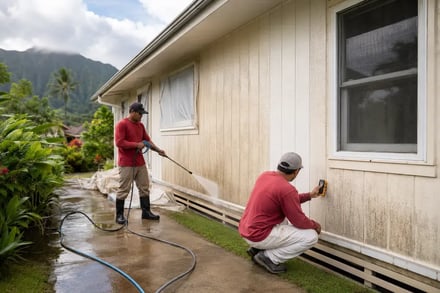 Most exterior painting projects begin with washing the home to remove dirt, chalky paint residue, mildew, salt, dust, and other contaminants.
However, the walls cannot always be painted immediately after washing. Wood, stucco, masonry, and joints can retain moisture, especially in shaded or humid areas. The exterior needs adequate drying time before primer or paint is applied.
Painting a damp surface can trap moisture beneath the coating and contribute to blistering, peeling, or adhesion problems later. Drying may take longer after heavy rain or on windward sides of a home that receive less direct sunlight.
4. Wood, Stucco, or Metal Repairs
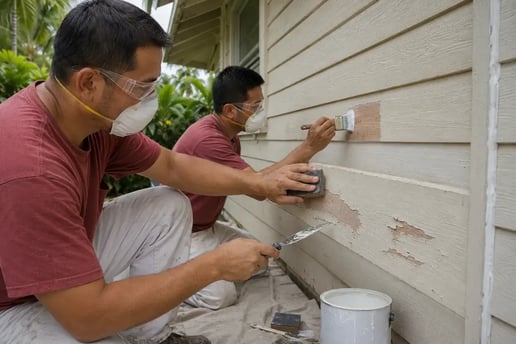
Exterior damage often becomes more visible after the home has been cleaned. Wood siding and trim may have rot, splitting, open joints, or damaged sections. Stucco may have cracks, loose patches, or areas where water has entered. Metal railings, gates, and fixtures may have rust that must be cleaned and treated.
Minor repairs can often be incorporated into the preparation process. More extensive deterioration may require additional work or coordination with another trade before painting can continue.
Covering damaged material with paint does not solve the underlying problem. Completing the repairs first protects the finished coating and helps prevent the same defects from quickly returning.
5. Mildew and Salt Buildup
Hawaii’s climate creates surface conditions that are not always found in drier regions.
Shaded and windward walls may develop mildew or organic growth because they stay damp longer. Homes near the ocean can collect salt residue, which may interfere with paint adhesion and accelerate corrosion on metal surfaces.
These contaminants need to be properly removed before coating begins. Severe buildup may require additional cleaning or treatment, followed by enough time for the surface to dry.
Homes in Honolulu, Kailua, Kaneohe, Kapolei, Mililani, Haleiwa, and other parts of Oahu can experience very different exposure conditions. Kapili Painting’s Oahu painting services account for the climate and surface conditions found in each area.
6. Priming Requirements
Not every exterior requires the same amount or type of primer.
Some homes only need spot priming where bare material has been exposed. Others may require more extensive priming because of widespread peeling, porous stucco, repaired surfaces, stains, rust, or a major color change.
Different materials may also need different primers. Bare wood, masonry, metal, and previously painted surfaces do not always receive the same product.
Proper priming adds a step to the project, but it supports adhesion, helps create a uniform finish, and improves the performance of the complete coating system.
7. Number of Colors and Coats
A straightforward exterior with one body color and one trim color will usually move more efficiently than a detailed design using several colors.
Each additional color may require separate masking, cutting, setup, cleanup, and inspection. Decorative trim, shutters, railings, doors, fascia, and accent areas also require more detailed work than broad wall surfaces.
The number of coats depends on the selected product, the condition of the surface, the existing color, and the new color. Large color changes may require additional coverage to achieve an even appearance.
Choosing the correct coating is just as important as choosing the color. Read our guide to the best exterior paint for Hawaii to learn how UV exposure, salt air, rain, and humidity affect paint selection.
8. Rain, Humidity, and Wind
Hawaii’s weather is one of the most important—and least controllable—parts of an exterior painting schedule.
Rain can stop surface preparation or painting. High humidity can slow drying, while strong winds can make spraying unsafe or carry overspray toward vehicles, landscaping, windows, and neighboring properties.
Conditions can also vary around the same home. One side may be sunny and dry while another remains shaded and damp.
A weather delay does not necessarily mean the project is being poorly managed. Sometimes waiting is the correct decision. Applying paint outside the manufacturer’s recommended conditions can affect adhesion, appearance, and long-term performance.
9. Access to High or Difficult Areas
Homes built on hillsides, narrow lots, or properties with limited access may take longer to prepare and paint.
Difficult areas can include:
- Upper-story walls
- High peaks and rooflines
- Narrow spaces between neighboring homes
- Walls above carports or additions
- Steep or uneven ground
- Areas blocked by heavy landscaping
- Surfaces requiring scaffolding or a lift
Crews may need additional setup time to reach these areas safely while protecting the home, surrounding property, and landscaping.
10. Final Inspection and Touch-Ups
A professional exterior painting project should not end as soon as the final coat is applied.
The crew should inspect the painted surfaces, check the coverage, examine trim lines, remove masking materials, complete necessary touch-ups, and clean the work area. The homeowner should also have an opportunity to review the completed work.
Touch-ups and final inspection are part of the project—not unnecessary delays. This stage helps catch small details before the job is considered complete.
What Does the Exterior Painting Process Include?
Although every property is different, a typical exterior painting project may include:
- On-site inspection and project walkthrough
- Protection of landscaping and nearby surfaces
- Pressure washing and surface cleaning
- Drying and moisture evaluation
- Scraping, sanding, and removal of loose paint
- Wood, stucco, caulking, or minor surface repairs
- Mildew treatment and rust preparation where needed
- Spot priming or full priming
- Masking and protection of windows, doors, roofing, and fixtures
- Application of the specified paint system
- Final inspection, touch-ups, cleanup, and homeowner walkthrough
Some steps may overlap, while others must be completed in order. For example, primer cannot be applied until the surface is clean, stable, and sufficiently dry.
Why a Faster Painting Job Is Not Always Better
A short schedule may sound appealing, but speed should not come at the expense of preparation or drying time.
Rushing can result in paint being applied over damp, dirty, loose, or damaged surfaces. The finish may initially look acceptable, but coating failure can appear later.
A dependable contractor should explain what preparation is required, which products will be used, how weather delays will be handled, and how the property will be protected.
Kapili Painting provides written, itemized estimates so homeowners can understand the preparation, materials, and labor included in their residential painting project.
How Can Homeowners Help the Project Stay on Schedule?
Homeowners can help reduce avoidable delays by preparing the property before the scheduled start.
Helpful steps include:
- Moving vehicles away from the work area
- Removing fragile decorations from exterior walls
- Trimming plants that directly touch the home
- Providing access to gates and exterior water sources
- Keeping pets safely away from work areas
- Confirming colors before painting begins
- Informing the contractor about leaks or known damaged areas
- Coordinating access to locked yards, lanais, or storage spaces
Your contractor should explain exactly what needs to be moved and what the painting crew will protect.
How Do You Get an Accurate Exterior Painting Timeline?
The best way to estimate an exterior painting schedule is through an on-site inspection.
A contractor needs to see the home’s size, layout, access, existing coating, surface materials, repairs, mildew, salt exposure, and surrounding conditions. After that evaluation, the contractor can explain the expected process and identify issues that could affect the schedule.
Even then, the timeline may need to remain flexible because rain, humidity, wind, or hidden surface damage can change the plan.
Frequently Asked Questions About Exterior Painting Timelines
Can an Exterior House Be Painted During Hawaii’s Rainy Season?
Exterior painting can still be completed during wetter periods, but the schedule may require more flexibility. Surfaces must be sufficiently dry, and paint should only be applied under conditions allowed by the coating manufacturer.
Does Pressure Washing Add Drying Time?
Yes. The exterior must be allowed to dry after washing. The required drying period depends on the material, shade, humidity, airflow, recent rain, and how much moisture the surface absorbed.
Does Peeling Paint Make the Project Take Longer?
Usually, yes. Loose and failing paint must be removed, and exposed areas may require sanding, repairs, and primer before finish coats can be applied.
Can Painters Work on Different Parts of the Home at the Same Time?
Depending on the crew size, property layout, and weather, work may be divided among different areas. One section may be undergoing preparation while another is being primed or painted.
Will Rain Damage Newly Applied Exterior Paint?
Rain can affect newly applied paint if it reaches the coating before it has had enough time to dry or cure. A professional painting crew should monitor the weather and follow the product’s application and drying requirements.
How Often Should a Hawaii Home Be Repainted?
There is no universal schedule. Sun exposure, salt air, rainfall, surface material, preparation quality, and coating selection all affect how long an exterior finish lasts.
Learn more in our guide on how often to repaint a Hawaii home.
Plan Your Exterior Painting Project With Kapili Painting
There is no single timeline that applies to every exterior painting project in Hawaii. The most reliable schedule comes from inspecting the property, identifying the preparation and repairs required, and accounting for local weather and access conditions.
Kapili Painting provides exterior painting services for homes across Oahu and Maui. Our team evaluates the property, explains the required preparation, and provides a written estimate based on the home’s actual condition.
Request a free exterior painting estimate to get a clearer understanding of the process and expected timeline for your home.
